Advocacy #8: Sport the colors
There has recently been a lot of hoopla in my world about the “right” way to celebrate Down Syndrome Awareness month. Do we call attention to the disability? Do we ignore it and just show our families living “normal” lives? Do we point out the differences in our children? Do we show how they are doing all the things that typical children are doing? Do we do nothing?
All are good and valid.
I do not believe that society has moved far enough toward acceptance of individuals with intellectual and physical disabilities to ignore Down syndrome awareness efforts. I do not believe that my child should be singled out because of her disability. I do not believe that we should shy away from any opportunity that would “normalize” the life that we lead. I do not believe that our life is normal. Whose life is normal?
I like to wear the colors – I like to have fun with awareness and buy goofy t-shirts and give people a reason to ask questions, So I like things like these little gems. And if you like them too, you can find them and buy them and wear them. Links to their respective “stores” are included:
From The Littlest Warrior, cute shirts like this for the kiddos…

And adults…

For jewelry, I love Etsy. Search “down syndrome” and you’ll find lots of cool stuff like these:
(I have this first one and LOVE it)
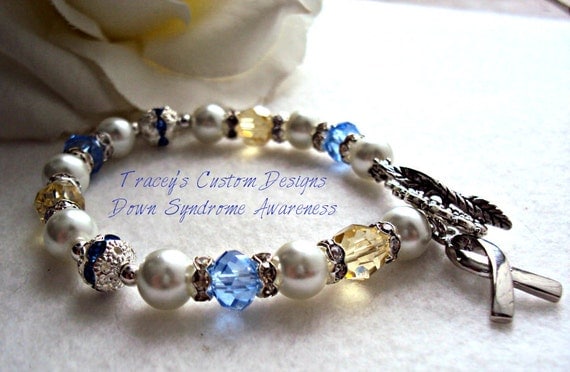
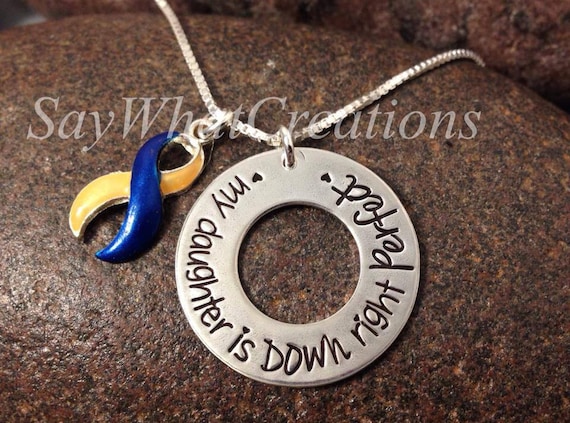
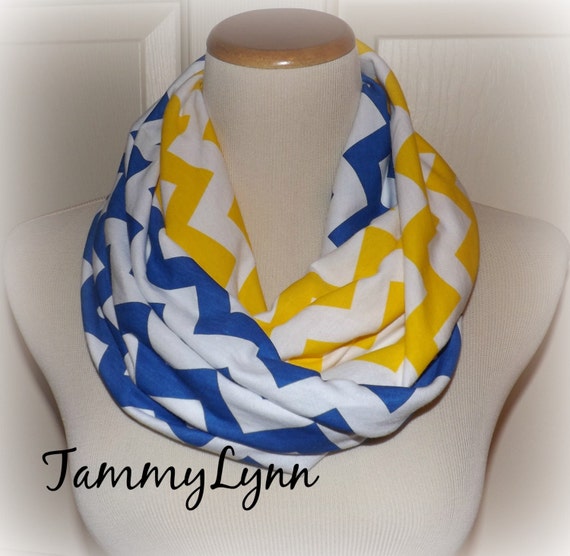
You can also shop the stores of some really great groups, like the shop through the NDSS.
Advocacy through fashion… I like it! 🙂
Advocacy #6: MAKE IT STOP!
The R word.
I mean, seriously.
It’s 2015.
Don’t say it. Don’t avoid calling others out on it when they say it.
There are people who will try to make you feel really bad about telling them to stop using the R word. They will tell you that you are too sensitive and they mean nothing by it and that people these days need to “lighten up.”
Be tough. Be strong. Be brave.
Keep fighting.
Advocacy #5: Use people-first language
In the Down syndrome community, great effort is made to help the world see our children first. There are pros and cons to having a visible disability. On the positive side, people recognize that you may need help. On the negative, people assume that you need help. It’s a double-edged sword.
People-first language establishes that an individual is defined as a person before any particular diagnosis. It means calling Tessa “a child with Down syndrome” and not a “Downs child.”
I have to assert here that we are talking about the Down syndrome community. Other communities (for example, the Autistic community) have a different viewpoint.
To me though, people-first language means dropping the label altogether as often as possible. I realize that there are times when her diagnosis needs to be communicated and referred to. I’m not in the business of pretending that it isn’t there. However, in my mind, person-first language goes beyond saying “a child with Down syndrome” and just saying “a child.” An example…. humor me here, please…
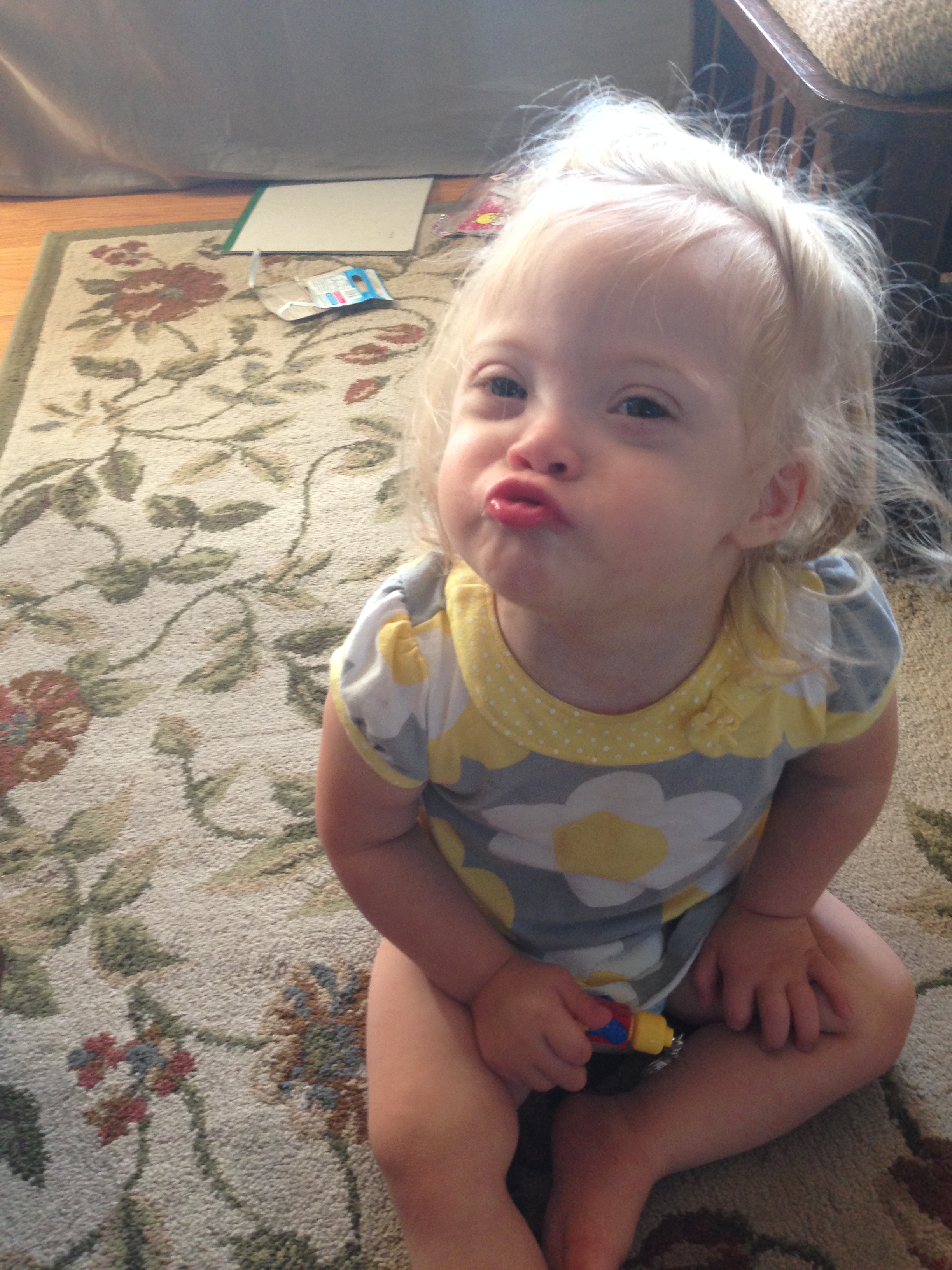
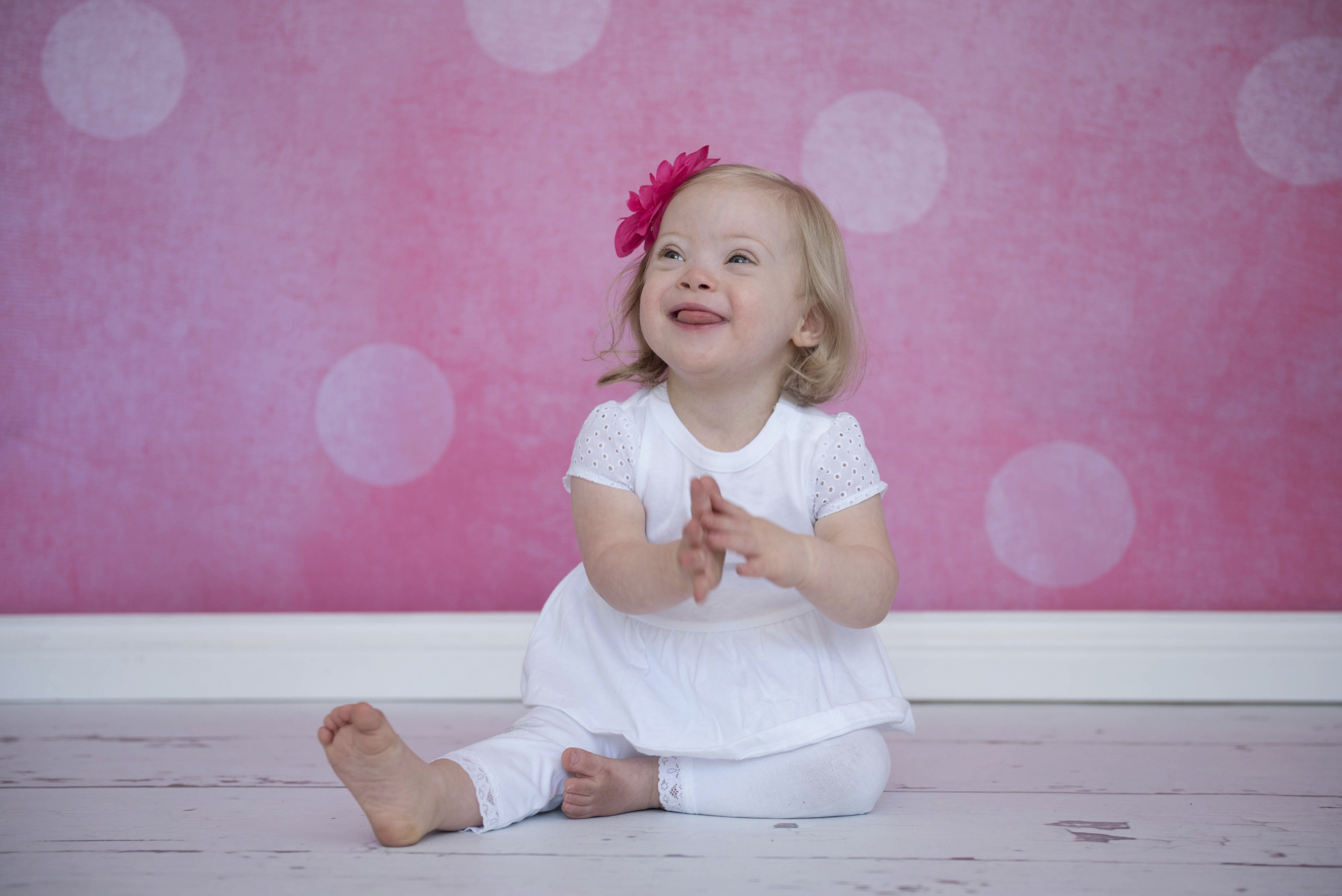
Say you run into Tessa and I in a Panera. She’s her usual ham of a self, giving you high-fives and blowing kisses.
“Wow!” you might respond, “what a sweet little Downs baby!”
or maybe “Wow! What a sweet little baby with Down syndrome!”
or perhaps “Wow, what a sweet little baby!”
In the Down syndrome community, our preference would be choice three.
But, shhhh, I’ll tell you a little secret. If you mean no harm, I’m not going to correct you on any of it.
I’ll be the first to recognize that for the standard human, there are a lot of rules to follow from a variety of communities who all just want what is best for their members. My plea tonight is not just to those who are not directly tied to the Ds community, but to our own members as well. Fight the battles worth fighting. Make a point to teach a lesson when you can make a difference. Use love and example and above all else, be patient with those who are learning.
If the person is being blatantly rude just to be an ass, by all means, have at them.
But otherwise, lead by example. People first, if you would please.
31 for 21 Day 4: A little off the topic of advocacy
We interrupt this regularly scheduled program to share an exciting morning. Our thoughts on advocacy will continue tomorrow, but I thought it was important to share that Tessa and I had our first conversation this morning.
At an unreasonable hour (5:56 am), Tessa was being quite loud in her crib, so we took her out and made her crawl around in bed with Mom and Dad. After about half an hour, she got a little restless.
(All words were signed and spoken by me. Tessa spoke “down” but just signed the rest.)
Tessa: Da… Da… Da! (down)
Me: Oh, you want to get down from the bed?
Tessa: Da. (points forcefully at the door)
Me: Downstairs?? No, wait.
Tessa: Da. Eat. Milk.
Me: No, wait. No milk, no eat. Wait.
Tessa: Cookie.
Me: Wait. No cookie. Wait.
(pause)
Tessa: Cookie please.
BOOM. Tessa for the win.
Advocacy #3: Give us a smile
con·spic·u·ous
kənˈspikyo͞oəs/
adjective
1. standing out so as to be clearly visible.
2. attracting notice or attention.
synonyms: easily seen, clear, visible, noticeable, discernible, perceptible, detectable; person with Down syndrome
^
That’s reality right now. Not that everyone in the room notices us, but that everyone in the room who does notice us can see that we are different.
We have run the gamut of responses to Down syndrome (remember this guy??). Not all responses are negative. Most, in fact, are quite benign, even a little sweet. And they bring me to another little way that you can advocate for people with Down syndrome: smile.
Smile at everyone you meet on the street. Good or bad, rich or poor, sick, healthy, clean, dirty, happy or sad. A smile says “Hey, I see you, human being.” I’m not saying you should fawn over every individual that crosses your path, nor should you go out of your way to grin awkwardly at someone who is different. I’m saying that it is pretty cool if you let your eyes meet someone else’s (anyone else’s) and allow yourself to smile. And though you may think it far-fetched, it’s advocacy at its finest.
You see, when you share a smile with the differently-abled, the marginalized, those on the outskirts, it’s not really about them, it’s about the others in the room. It’s about showing the world that it’s cool to be cool with everyone. When you treat everyone who looks a little different with the same dignity and respect as you would that nice-looking, decently dressed human being walking toward you in the grocery store, it sends a message.
We are all humans. Advocate for the humans by smiling kindly at the humans. You can’t go wrong with that.
Advocacy #2: Donate
Can we just get this one out of the way? It’s uncomfortable for me, it’s probably uncomfortable for you, but it’s advocacy with minimal effort and on a Friday night after Homecoming Week, it’s what you get.
Here is a cute picture to distract you from the awkwardness of this post:

In all seriousness, I would urge you to carefully consider which charities you choose when sending in donations. Some groups spend a lot of money on staff and publications and little on the cause itself. Others promote ideas that do much more harm than good (Autism Speaks, I’m calling you out). We have our own favorite Down syndrome charities and groups (listed below) that support our own viewpoint and mission for Tessa. There are others, but these are the ones that we feel best support inclusion and advocacy for individuals with Down syndrome:
National Groups:
National Down Syndrome Society – http://www.ndss.org/About-NDSS/Mission-Vision/
National Down Syndrome Congress – http://www.ndsccenter.org/mission-and-history
The Down Syndrome Diagnosis Network – http://www.dsdiagnosisnetwork.org/
Local to Illinois/Chicagoland:
National Association for Down Syndrome: http://www.nads.org/about-us/
UPS for DownS: http://www.upsfordowns.org
One more for those who are into medical research and treatment (I’m still undecided):
The LuMind Foundation – http://www.lumindfoundation.org/
Happy Donating! 🙂
Advocacy #1: Be “In the Know”
Let’s be realistic here: the vast majority of people we meet in the street know little to nothing about Down syndrome. I knew as much as my ninth grade Biology teacher had taught me (I was a good student, but still, not much stuck). Extra chromosome, learning difficulties, yada yada.
I knew nothing.
While I know lots now, I still know nothing.
When I talk with other people, I have learned to assume they know nothing realistic about Down syndrome and take the approach that it is simply my job to teach them. After all, two years ago, I knew nothing. Why would they? In addition to that, people who were born with Down syndrome even 10 years ago have a dramatically different life experience than those being born today. It is important to educate ourselves if we, in turn, want to educate others. Believe me, there is nothing that I love more than setting the record straight when it comes to information about Down syndrome.
Some facts for you… so that you can be “in the know” when someone starts talking about Down syndrome:
Down syndrome (Trisomy 21) occurs when a third copy of the 21st chromosome is present in an individual.

There are three types of Trisomy 21 – translocation and mosacism are much more rare. Tessa has the standard type. Usually, the extra chromosome is from the mother, but in about 8% of cases, it comes from Dad.
No, we don’t know which parent gave Tessa her special gift.
Trisomy 21 is a random and common abnormality. It’s not a disease, it’s not contagious, it’s not preventable, it’s not predictable. It happens equally across all races, religions, and economic backgrounds. Yes, the odds increase as a woman ages, but most babies with Down syndrome are born to younger moms simply because younger moms have more babies in general.
You will often hear about the IQ of people with Down syndrome being low to very low. However, we know now that IQ tests do not accurately measure the intelligence of people with Down syndrome because of their difficulties with communication. We know that with interventions and schooling and inclusion, people with Down syndrome most often live independent lives. They can learn to drive cars, get married and some have children. They can work, they can go to college. They can do most anything – they just need some extra time and maybe some extra help.
Typical issues that people with Down syndrome might deal with include heart defects, intestinal issues and Celiac disease, hypothyroisim, obstructive sleep apnea, leukemia, and in the long term, Alzheimer’s disease. Not everyone will have these issues.
It is important to know that while these occur more often in Down syndrome than in the typical population, response to treatment is much more successful if a person has Ds.
Most importantly, studies continue to show that people who have Down syndrome tend to express very high levels of satisfaction with their lives. In one study, 99% of the over 3,000 individuals studied reported being happy with their lives and 97% like who they are. Their families are generally content; families also experience lower divorce rates than those without children with Down syndrome.
Please stop for a moment and think about all of the people that you know. Are 99% of them happy with their lives?
Food for thought.
Get ready… get set…
Last Wednesday at 8:30 pm, well past my bedtime, I found myself sitting at the kitchen table, hastily drawing on posters and t-shirts for a rally to preserve Early Intervention funding in Illinois.
“Mag,” John quipped from across the room, “you were born to be an advocate. You just needed a cause.”
This is true.
Before I had Tessa, if asked what my hobbies were, I had no answer. I’m not boring (I don’t think), just never had something that totally captured my interest. Now, I have Down syndrome and special needs advocacy. It’s an odd thing to qualify as a hobby, I suppose. It’s not something that I do for fun necessarily. In a way though, it’s something that I do because it feels productive and important and that is fun in my mind.
I recognize, of course, that this brand of advocacy is not for everyone. Heaven knows that I’ve had enough conversations with enough people to know that some find us to be “takers, not makers” and unworthy of such silly requests as funding for basic therapies and a place in the classroom.
Ugh. We’ll be addressing this later.

In any case, all of this is important because tomorrow, October 1st, marks the beginning of Down Syndrome Awareness Month and the 31 for 21 Challenge. Last year, we wrote about 31 things that we have learned since we had Tessa. This year, we’re sharing 31 mostly simple ways that you can advocate for people with Down syndrome (or people with special needs in general). I would never presume to tell you that just because this is my cause that it has to be yours, too. But, if you should want to make a small difference in the lives of people like Tessa, in honor of this month or just because you want to, we are excited to share some ways to make a difference.
Thanks for joining us.
To hear our radio interview at the Early Intervention rally last week… click here: http://wuis.org/post/funding-worries-persist-parents-disabled-children


 Yo soy La Lay