Yo soy La Lay

adventures in family, faith, and Down syndrome

Lesson #11: Daycare is just the right thing to do (for us)

This is part of the 31 for 21 blog challenge!

There was never a doubt in my mind that I would be a working mom. Some girls imagine themselves taking care of babies and running their households. That was never me. I do all of that stuff, but I also have a job that I love and my kids go to Miss Julie’s house for their daytime care.

I’ll tell you more about Julie when I have a keyboard and I can do her justice. For now, suffice it to say that she has been a true blessing for our family. My girls adore her and her house.

What I love about daycare for Tessa is that she is totally thriving surrounded by older, typical kids. While playing with her sister gives her some exposure to words, movement, big-kid stuff, play at daycare is even more busy and complex. It has been her normal life routine for so long, since she was just three months old. It’s good for her. Case in point:

IMG_6432.PNG

Julie sent me that picture yesterday. It looks boring enough, just four kids hanging out around the box of Frozen toys. But the amazing background story is that Ellie and the other two were playing excitedly with these toys and Tessa army-crawled her way across the room to see what they were playing with. Motivation. Example. Acceptance.

She is in the right place.

1 Comment »

Lesson #7: Tessa makes some people uncomfortable

This is part of the 31 for 21 Blog Challenge!

I will preface all of this by saying that the vast, vast majority of people that we interact with make no issue of Down syndrome.  As a matter of fact, we haven’t had a single person express anything other than complete joy about our baby girl and her extra chromosome (at least to our face).  However, it is also not lost on me that there are a couple of people in my life who have literally dropped off the face of the earth since Tessa was born.

We are proud of Tessa and we will bring her into the community and show her off.  She will participate in all of the activities that she wants to and sometimes she’ll do things differently than other kids.  She will go to Chili’s for dinner with us.  She will putz around at the zoo.  She will sit restlessly through church.  She will go Trick or Treating for Halloween and we’ll take her to the Chicago to see the Christmas trees at the Museum of Science and Industry.  She will look different and probably sound different doing all of those things and we are just fine with that.

We know that others are not.

We know that sometimes people will stare because they don’t know what else to do.  Or sometimes, they will refuse to meet our glances because they think that somehow, that’s better for everyone.  Someday, someone will be impatient with her and will grow angry with her slow and steady pace.  I cannot always save her from those people.

I will not be surprised the day that I get a call from the principal saying that Ellie has punched some snot-faced boy in the nose for calling Tessa the r-word.

This is also part of our reality.  It’s a part that we are trying to change, or at least minimize, but we know it’s there.  I know that there are people who are uncomfortable with the differences that Tessa represents.  It’s kind of sad.

To the former friends who have since left, we truly wish you all the best.  Mostly, we hope that someday, you will open your heart to experience the light and love that Tessa brings to our world.  It’s amazing.

And, for the record, the day that I get the call from Ellie’s principal, she is most certainly gonna be in trouble.

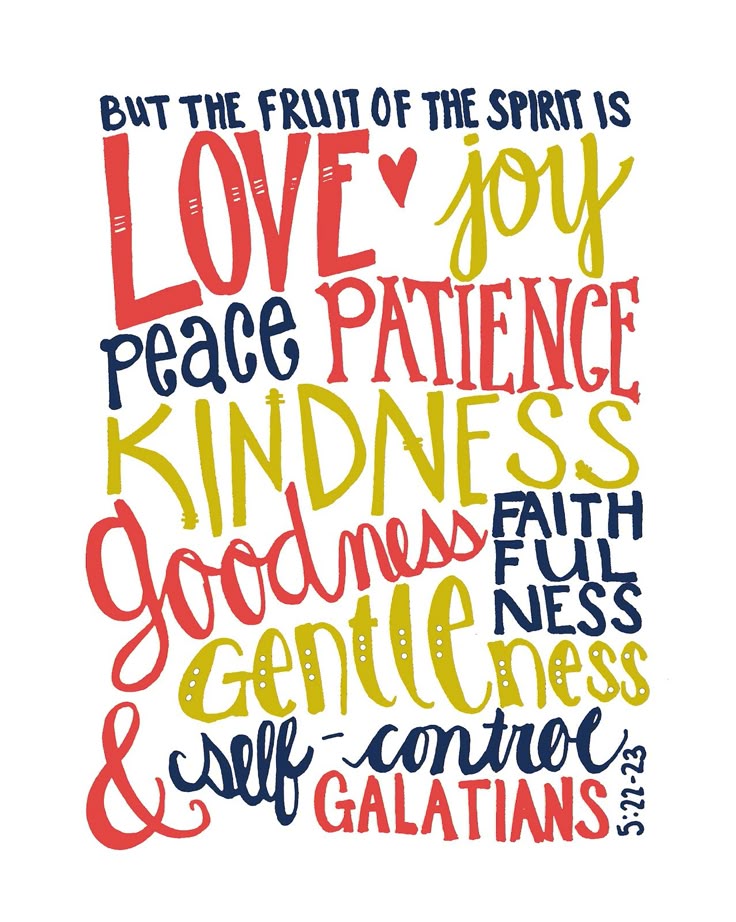
Free Printable scripture art.

3 Comments »

Lesson #5: There is no “should”

This is part of the 31 for 21 blog challenge!

As is well documented on this blog (for example, here, here, and here), I often struggle with when Tessa will learn new skills.  Lots of moms whose kiddos have special needs ask those questions.  Impatience is just part of the game sometimes.  When a baby is born with Down syndrome, the milestone charts get thrown out the window.  We all know our kids will get where they are going; it’s just a matter of when.  Waiting for when can be frustrating.  The feeling that she should be able to do something nags a little at the back of my brain.  From time to time, I freak out that I’m not working with her enough.  And yet….

In the ebb and flow of my feelings about Down syndrome, I often find it immensely liberating that Tessa works at her own pace to meet her milestones.  Milestone charts exist for a reason (above and beyond the ability for moms to compare their children 😉 ).  They don’t really apply to Tessa because she has a diagnosed disability and we have known, since birth, that she’s on her own schedule.  She has no should.  However, the knowledge of when things should happen is actually vital to the typical child.  When typical babies are born, milestone charts assist parents and doctors in determining if a child needs extra support or may have special needs.  Unlike with Down syndrome, you cannot see a learning disability, autism, or a sensory disorder by looking at a child.  Milestone charts, or knowledge of typical behaviors and development, help diagnose and support parents.  They ensure that the child can receive interventions at the earliest possible time.  We already have our diagnosis, and while a diagnosis certainly doesn’t make life any easier, the blessing of knowing what the diagnosis is is not lost on me.

For both Ellie and Tessa, at the beginning of each Well-Baby check-up, the nurse asks a series of questions about their development.  When I have to answer about Ellie, I feel pressure.  If she cannot do something, I go home and google when she should have mastered it.  When they ask about Tessa, I just laugh.  Many times, I get to say “yes, she can.”  Sometimes, it’s a “not yet” or “we’re working on it.”  But there’s no pressure.  I have no need to compare what she can do to anyone else,  because there is no should.  And that is empowering.

This post was inspired by some moms in my Rockin’ Moms group on Facebook, organized by the Down Syndrome Diagnosis Network.  Thanks, ladies, for asking great questions and being so supportive.  🙂

2 Comments »

Lesson #3: Amanda really did us a favor

Amanda is the Nurse Practitioner that delivered the preliminary diagnosis of Down syndrome to John and I.  For a long time, I really struggled with her decision on how to tell us about Tessa.  But in celebration of Down Syndrome Awareness month, we’re sending her a letter of thanks.  Here’s the letter:

October 3, 2014

Dear Amanda,

You may not remember my family, but I am writing today to thank you for an experience that we had with you that I will never forget.  In December of 2013, my daughter, Tessa, was born at your hospital.  You might remember her looking like this:

Her birth happened very quickly and as I vaguely recall, you were called to the delivery because her heart rate was dropping.  Within moments after her delivery, while I was still in the process of delivering the placenta, you told my husband, John, that she had strong markers for Down syndrome.  We did not undergo any prenatal testing, so this news completely blindsided us.  I was frozen in that moment for a long time.

I will be very honest with you, at first, I was very angry at the way you shared her suspected diagnosis with my family.  I felt, at the time, that it could have waited until I was at least done with my labor and had had the opportunity to hold my sweet girl.  But with time comes perspective, and I want you to know that the way you shared the news with us was quite possibly the best thing someone has ever done for my family.  I have never felt angry or devastated about my daughter’s genetic make-up and while there are many factors that play into my outlook on Tessa’s life, you were certainly key.

You see, I have joined a lot of communities for families with children with Down syndrome since Tessa’s birth and have consistently heard horror stories of (probably) well-meaning doctors delivering a diagnosis like a death sentence.  However, the way that you treated her extra chromosome… as a passing fact rather than a defining characteristic… set a precedent for the way we have approached Tessa and her life.  She is our daughter, a person first, more alike than different.

Tessa is nine months old now.  She is happy-go-lucky, quick with a smile, laid-back, and is totally thriving.  Her older sister absolutely adores her.  She is the favorite “toy” in her daycare.  We were in tears when we got to experience her first giggles.  She is almost crawling on all fours.  My whole family is smitten with Tessa.  She has truly changed our life in the most amazing way.

The team at CDH who took care of us during Tessa’s time in the NICU was absolutely stellar and we recommend everyone we know to this hospital.  In the spring, when Tessa was admitted to a different hospital in respiratory distress (she had pneumonia), we insisted on being transferred to CDH once she was stable because we knew that the care our family would receive is unmatched.  I sincerely thank you for not defining my daughter by her diagnosis and for not giving us a single reason to feel sorry for our beautiful little girl.

Most sincerely,

John, Maggie, Ellie, and Tessa

PS: For other resources for delivering a Down syndrome diagnosis, I highly recommend the Down Syndrome Diagnosis Network.  They have great resources for physicians and familes alike:  http://www.dsdiagnosisnetwork.org/ 

2 Comments »

When you can’t hold all the babies you want

In the moments following Tessa’s birth, after the doctors and nurses left and it was just John, my mom, and I, we processed.

I write to you today having just had a “conversation” with another blogger whose daughter also has special needs. I want to explain to her – and you – why my reaction to a life-altering diagnosis was fairly mundane. While there are many, many life reasons that are a part of it, two stick out most prominently.

My mom hadn’t been in the room when Tessa was born and diagnosed. She had just shown up to the hospital to bring John some lunch and to keep me company while we waited for the baby. While I believe that she knew the baby had arrived before she entered, she essentially walked into our strange post-birth vortex on accident. I don’t remember telling her about Tessa or Down syndrome or anything else when she arrived. Maybe she remembers those moments, and maybe someday I’ll get her to share them with all of us, but having her there was one of the catalysts for just moving forward. Soon there would be other family arriving to meet our girl and I sure as hell wasn’t going to have a pity party after I had just given birth.

Besides (and probably more importantly), the road to Tessa was not smooth. When couples set out to have a family, nobody tells them how hard it can be to get the family that they expect. It’s hard for me to not feel envious that for some people, the “having a baby” part is so easy… especially when they take it for granted. For us, it has not been so.

Our first baby was not planned. We were set to head off on a three week road trip and while packing, it dawned on me that I hadn’t had a period in… awhile. I took a test, it was positive, and we freaked out. We told our families. We bought a little AC/DC onesie. We had an ultrasound and saw its little heartbeat. A week later, after another ultrasound, we learned that the baby did not survive. Nine weeks in the womb. My body did not naturally miscarry, so a D&C followed soon after.

Next was Ellie. We know how that turned out. She is wild. (And, currently involved in quite the love triangle at daycare. Good Lord.)

We planned the next baby for a time that was going to be convenient for us (or so we thought). It took a couple months, but soon there was another positive test. In an attempt to calm my nerves, my doctor let me have blood draws to check my hormone levels. They didn’t behave as they should. It was not looking good. I carried that wee one for 10 weeks before we had official confirmation that she would never be born.

Genetic tests following both of my D&Cs found no abnormalities in either child.

I carry those babies around in my heart and think of them most days. Mostly, I imagine that a woman who died before having children might be holding them in Heaven. Maybe that’s crazy, but it helps.

John’s reaction to Down syndrome was more typical. He mourned the baby that we had planned to get but didn’t come. He worried from the moment she was diagnosed. He wondered what kind of life we would all have. I’m certain that my own attitude made him feel badly about his reaction.

If you are struggling with your child’s diagnosis, please know that you are not alone. His reaction wasn’t wrong and neither is yours.

In a moment of sheer panic, John turned to me and asked how I could possibly be fine with “all of this.” My response was simply that when you don’t get to hold all of your babies, the ones that do make it just feel even more miraculous.

That is why I can take this in stride. Tessa’s very existence on this planet is something that not all babies will get to experience. I am so desperately thankful that I have been able to hold and tickle and kiss this little being. That is all. Because we don’t always get to hold all the babies that we want to.
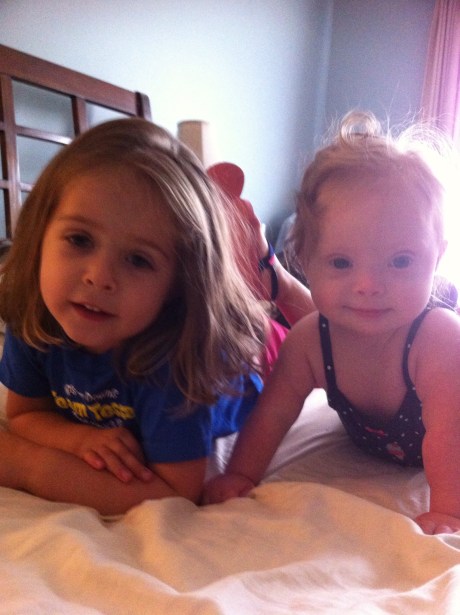
IMG_6170.JPG

8 Comments »

On Language

Words are so powerful.  The problem is that words are also so tricky.

My life’s work is teaching students how to use new words to express themselves… to get what they need, to make a new friend, to experience the world differently.  The excitement of a student on a Monday morning who used Spanish to order in a restaurant on Saturday afternoon is beautiful.  16 year old teenagers beam from ear to ear as they tell me about how they understood someone in the checkout line at Jewel.  And I beam right back.   

One of the difficulties in teaching language is helping my students understand the differences in culture that can evoke strong emotion when a word is used incorrectly.  As a study abroad student in Ecuador, I lived with an absolutely wonderful family.  Toward the end of my stay with them, my host brother commented on how my host sister and I were similar.  He said that she and I are very intelligent, but like to have fun.  Trying to agree with him by saying that we are both kind of silly, I used the word “estupida” to describe my host sister and I.  Now, my Profe Junkroski taught me better than that back in my first year of Spanish, but in my rush to get my feelings out, I used a word that carries a much stronger meaning in Spanish than what I wanted to convey.  Her face flushed, as did mine…  it was painful and awkward.   

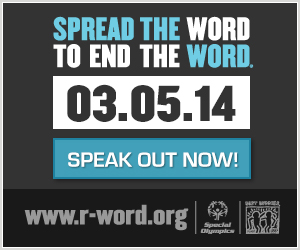
This is what happens when someone uses the word “retard” or any of its various forms.  

Let’s not mince words here.  The fact of the matter is that my child will most likely be mild to moderately mentally retarded.  That is an accepted and appropriate way for a professional to refer to her slower-than-typical cognitive function.  But it is not a word that is used to describe her as a person, nor is it appropriate for describing a mistake, or a rule that one might find bothersome.  It does not describe a friend who has done something silly, nor any other person or experience that is disagreeable.

You see, context is the tricky part of language.  And even the most mundane of words that we chose can evoke strong feelings in those around us.  Don’t believe me?  Say the word “mom” in front of someone who has just lost their mother or “pregnant” around someone who is struggling to conceive a child.  Don’t care?  That’s very sad and unfortunate for you.  

The reality is that we do not know the intricacies of the minds of those around us.  The joyful thing about language is that we have lots of words to use!  I’m not suggesting that one must avoid any and all words that could possibly evoke a negative reaction.  That is just impossible and quite unnecessary.  Again however, the word “retard” is only an appropriate way for a professional to refer to someone’s slower-than-typical cognitive function, and even there it is falling out of favor.  And rather than using the word “retard,” there are so many other ways to express ourselves that won’t turn the insides of our fellow human beings into knots.

When I called my host sister stupid, she and my host brother very graciously explained that the word I was looking for was “tonta,” with a meaning more similar to silly, which is what I actually meant.  If you hear the “r” word, might it be possible for you to do the same?

Image

7 Comments »