Yo soy La Lay

adventures in family, faith, and Down syndrome

Lesson #11: Daycare is just the right thing to do (for us)

This is part of the 31 for 21 blog challenge!

There was never a doubt in my mind that I would be a working mom. Some girls imagine themselves taking care of babies and running their households. That was never me. I do all of that stuff, but I also have a job that I love and my kids go to Miss Julie’s house for their daytime care.

I’ll tell you more about Julie when I have a keyboard and I can do her justice. For now, suffice it to say that she has been a true blessing for our family. My girls adore her and her house.

What I love about daycare for Tessa is that she is totally thriving surrounded by older, typical kids. While playing with her sister gives her some exposure to words, movement, big-kid stuff, play at daycare is even more busy and complex. It has been her normal life routine for so long, since she was just three months old. It’s good for her. Case in point:

IMG_6432.PNG

Julie sent me that picture yesterday. It looks boring enough, just four kids hanging out around the box of Frozen toys. But the amazing background story is that Ellie and the other two were playing excitedly with these toys and Tessa army-crawled her way across the room to see what they were playing with. Motivation. Example. Acceptance.

She is in the right place.

1 Comment »

Lesson #10: They’re different.

This is part of the 31 for 21 blog challenge!

(Another post from John tonight. It’s a short one (It’s Friday!!!). Soon, he’s going to need his own log-in name. 😉 )

This is a universal truth for parents of more than one child. Our children are very different. Not because of the extra chromosome, just because they are. Simply put, Ellie will make you laugh hysterically. Tessa will make you glow.

a little flashback to summer fun

IMG_6426.PNG

IMG_6427.PNG

Leave a comment »

Lesson #9: Mornings are far more complicated

This is part of the 31 for 21 Blog Challenge!

(John decided that he wants to contribute…. so this one’s from him.)

The only reason I’m doing this is because Maggie is going to burn out if she doesn’t get some blogging help…and because her blogs need something funny as opposed to serious.

If you are a parent you must know the joy of getting your kids out the door (especially when you have somewhere to be).  My morning is funny.  Mag is out the door before the kids are awake and to be perfectly honest, she doesn’t have a clue about being under pressure.  I know what you’re saying… Maggie was with Tessa in the NICU, Maggie was at Tessa’s ear surgery all alone, Maggie works with the therapists to help Tessa…but she doesn’t get the joy of helping these little humans look presentable before day care.  Therefore, she doesn’t know real pressure.

Here’s a story about real pressure:

This morning Tessa wakes up at 4:00 am because apparently she’s trying to get a head start on daylight savings time.  We have a talk while she eats her bottle.

Me: “Tessa, you need to sleep in later than this.”

Her: “Dad, you need to wake up earlier, today is a new day and you’re wasting it by sleeping.”

Me: “Yes, I understand your point, but you see, Daddy needs rest in order to have patience with your sister.”

Her: “Look, when you share a room with her then you can talk to me about patience, until then, just pass the formula.”

Then Ellie is awake.  At this point we are playing fictional character lottery.  What is fictional character lottery you ask?  Well, every morning when Ellie wakes up she is reincarnated as one of her favorite characters.  It could be Anna, Elsa, Aladdin, The Little Mermaid, Princess Sophia.  In any case, I begin the egg shell walk because if I get the wrong character, our little actress will be upset.  I am a lawyer during cross examination:

Me: “Good morning…Soph-”

Her: “I’M NOT SOPHIA”

Her head goes back under the covers and I let the anger hang in the air.

Me: “What I meant to say was…Good morning…um…Anna of Arond-”

Her: “I’M NOT PRINCESS ANNA”

I’m 0-2.  Third time is a charm or a strike and by now I’m going to be late as it is, so I may as well just keep throwing out names.  I say the entire cast of Frozen in 2 seconds.  She is staring with a look that says, If you think for one second that I’m going to reveal my identity this easily, you should turn around, walk to the bookcase, and re-read What to Expect When You’re Expecting.  Because in that book it clearly states that I AM NOT AN INFANT!

I let her pick out her clothes…part pajama, part scuba gear, and give her some goldfish crackers so I don’t awaken the hangry beast.  Meanwhile, Tessa needs to get dressed.  She wears something cute because she doesn’t realize she is opinionated about what Mags puts out for her to wear.

Ok, Let’s recap…Tessa is dressed, Ellie is dressed.  Here comes the hairbrush.  Combing Ellie’s hair should not be the dramatic scene that it becomes.  Never having had long hair, I suppose I am more sensitive to her “pain” when she gets her hair brushed.  She is able to avoid me at every turn.  If Ellie could move all day like she moves when she is about to get her hair brushed, I would sign her up for the NFL and put her on my fantasy football team because no one could catch her.  She’s like a greased chicken (if there is such a thing).

When I finally set her down to brush her hair we have a heart to heart.

Me: “Ellie, you have to get your hair brushed so you can look presentable”

Her: “Go brush Tessa’s hair, please”

Me: “Tessa doesn’t need her hair brushed, you are the person who needs their hair brushed.”

Her: “Can I brush your hair?”

So, of course, I let her brush my hair to be an example of courage in the face of the comb.  She begins to brush my hair and she looks at me and demands, “Cry.”

Me: “I’m sorry?”

Her: “Cry when you get your hair brushed.”

Me: “You want me to-”

Her: “Cry.”

I shed a few pretend tears and we trade places.  She sits patiently now that justice and fairness has presided over our situation and her hair is now brushed.  (Although, it still looks terrible because I tried to put it in a ponytail but it never looks as nice as when anyone else puts it up).

The finish line is in sight.  We are almost to the door.  We walk to the car.  We sit.  We belt.  We smile.  We realize we have left our favorite pink fleece in the house.  We need to get it.  We will not be calmed.  We will not be reasoned with.  We will all go back in to the house together.  We are now wearing the fleece.  We drive.  We arrive. We drop off.

I realize this ranting sounds like lies and exaggerations.  This is real life.  It is our life. Well, ok, Tessa can’t really talk, but that is a minor exaggeration.  But I didn’t tell you the best part.  When I drop them off they become two great, well-behaved kids (95% of the time).   I wish Ellie a great day and tell her I love her.  She promises me that she will be more well behaved in someone else’s care than mine.  Tessa smiles…it looks like a pity smile but who can tell.

I can’t emphasize this enough…This is not a complaint!  This is hilarious.  I truly wish you could have this experience because while the pressure is on, the time is crunching, and when everything seems like its falling apart… these kids make me laugh… They’re both nuts!  They fit right in. 🙂

IMG_6331

4:30 am Tessa

8 Comments »

Lesson #8: EI, EI, ooooooh do we have goals!

This is part of the 31 for 21 Blog Challenge!

Tessa’s disability qualifies her for Early Intervention (EI).  Any child who is diagnosed with a disability or developmental delay can receive these services in some way.  Most kids would have to go through a series of tests to determine if they qualify for Early Intervention.  Down syndrome is an automatic qualifier.

In Illinois, Early Intervention is not free.  However, the out-of-pocket cost is very low in comparison to what one might pay for therapies outside of EI.  The monthly charge is on a sliding scale based on income.

Potential qualifiers for EI go through an initial evaluation to determine what services are needed to help the child.  The initial evaluation was the craziest part of the whole process for me.  A lot of professionals sitting in my living room, asking a million questions about Tessa and her birth and her progress (at four weeks old) and then asking what I would like her goals to be… not my shining moment as a mother.

What goals would YOU have for your four week old baby??

So anyway, an evaluation happens.  After the evaluation, when we have determined what the delays are, we write an Individualized Family Service Plan (IFSP).  It explains our goals for Tessa, written in a way that explains what we want her to do (and why).  This document helps direct the services that we receive.  Services received through EI must support the written goals, so it is important to write a plan that covers every aspect of your child’s development that may need help.  Here are Tessa’s goals:

Tessa will continue to progress in her feeding, be able to self-feed and eat a variety of textures and temperatures.
Tessa will begin to communicate with people in her environment (something was added
here about all different types of communication, but I don’t remember how we worded it).
Tessa will be able to sit and play without assistance.
Tessa will interact with toys and people in her environment in all of the positions (sitting, back, tummy).
Tessa will begin to move independently by scooting, crawling, and walking

IFSPs are reviewed every six months.  If we want to add any services, we have to have a meeting in which we decide that it is necessary.  John and I are of the opinion that we should “frontload” the therapy now, while we have time (ha.) and it is covered under EI.  The hope is that we won’t have to have quite as much when Tessa is older.  So, she has speech/oral motor therapy, physical therapy, and occupational therapy each once a week.  We currently have developmental therapy once a month, but are planning to increase to once a week in another month or so.  Speech and O/T both go to daycare to work with her.  We have D/T and P/T at home.  🙂

Tomorrow, more on what therapy looks like with a little baby.  I bet you can’t wait.  😉

1 Comment »

Lesson #7: Tessa makes some people uncomfortable

This is part of the 31 for 21 Blog Challenge!

I will preface all of this by saying that the vast, vast majority of people that we interact with make no issue of Down syndrome.  As a matter of fact, we haven’t had a single person express anything other than complete joy about our baby girl and her extra chromosome (at least to our face).  However, it is also not lost on me that there are a couple of people in my life who have literally dropped off the face of the earth since Tessa was born.

We are proud of Tessa and we will bring her into the community and show her off.  She will participate in all of the activities that she wants to and sometimes she’ll do things differently than other kids.  She will go to Chili’s for dinner with us.  She will putz around at the zoo.  She will sit restlessly through church.  She will go Trick or Treating for Halloween and we’ll take her to the Chicago to see the Christmas trees at the Museum of Science and Industry.  She will look different and probably sound different doing all of those things and we are just fine with that.

We know that others are not.

We know that sometimes people will stare because they don’t know what else to do.  Or sometimes, they will refuse to meet our glances because they think that somehow, that’s better for everyone.  Someday, someone will be impatient with her and will grow angry with her slow and steady pace.  I cannot always save her from those people.

I will not be surprised the day that I get a call from the principal saying that Ellie has punched some snot-faced boy in the nose for calling Tessa the r-word.

This is also part of our reality.  It’s a part that we are trying to change, or at least minimize, but we know it’s there.  I know that there are people who are uncomfortable with the differences that Tessa represents.  It’s kind of sad.

To the former friends who have since left, we truly wish you all the best.  Mostly, we hope that someday, you will open your heart to experience the light and love that Tessa brings to our world.  It’s amazing.

And, for the record, the day that I get the call from Ellie’s principal, she is most certainly gonna be in trouble.

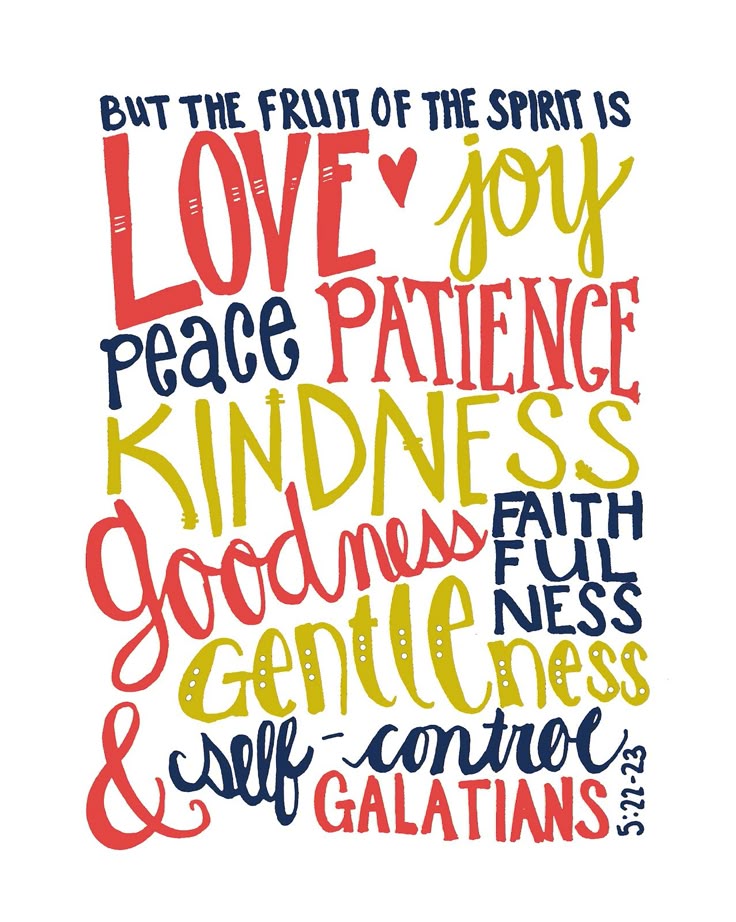
Free Printable scripture art.

3 Comments »

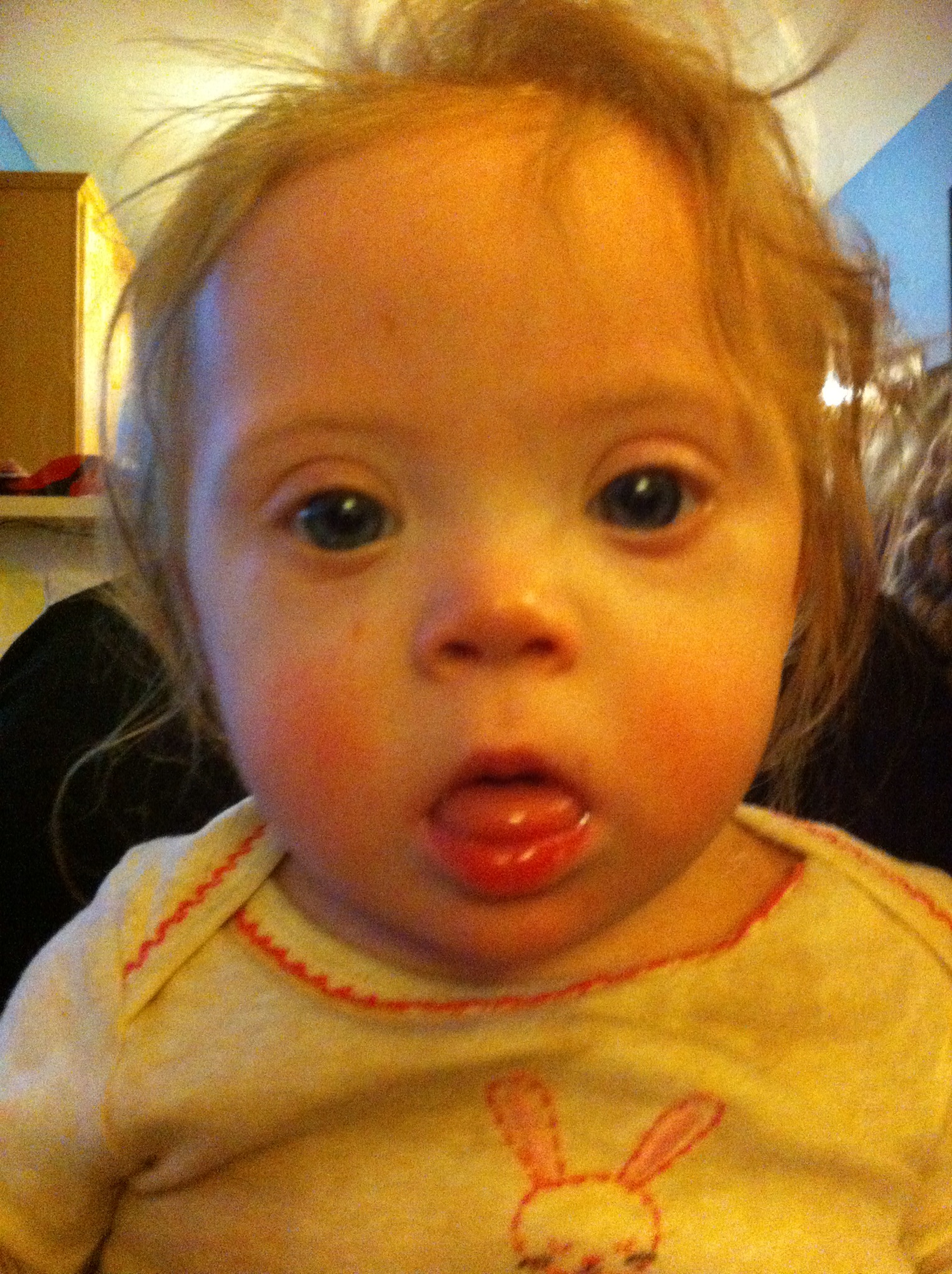
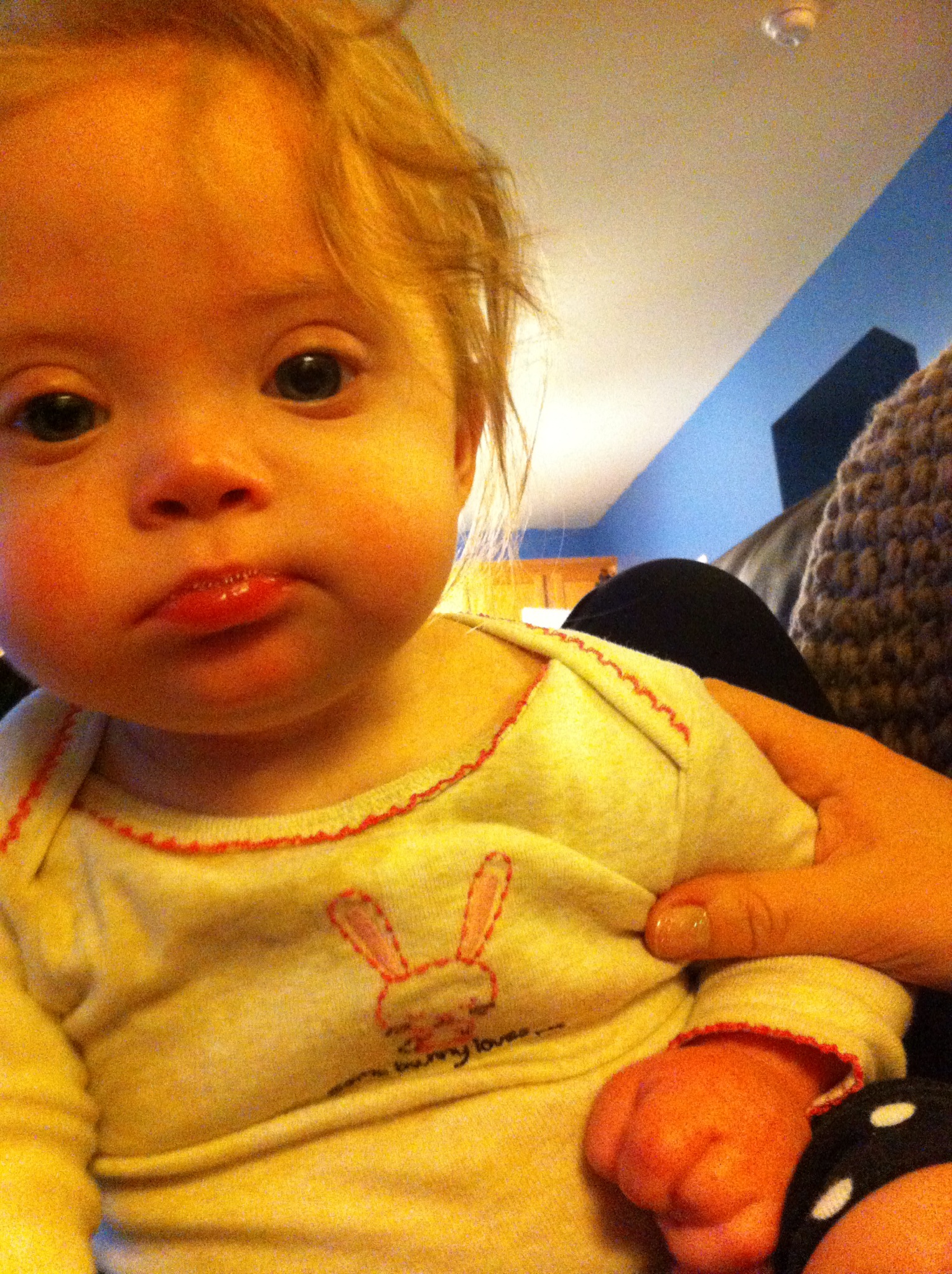
Lesson #6: Tessa has the best faces

IMG_6422.JPG

IMG_6404.JPG

IMG_6417.JPG

IMG_6401-0.JPG

IMG_6414.JPG

IMG_6413.JPGIMG_6415.JPG

2 Comments »

Lesson #5: There is no “should”

This is part of the 31 for 21 blog challenge!

As is well documented on this blog (for example, here, here, and here), I often struggle with when Tessa will learn new skills.  Lots of moms whose kiddos have special needs ask those questions.  Impatience is just part of the game sometimes.  When a baby is born with Down syndrome, the milestone charts get thrown out the window.  We all know our kids will get where they are going; it’s just a matter of when.  Waiting for when can be frustrating.  The feeling that she should be able to do something nags a little at the back of my brain.  From time to time, I freak out that I’m not working with her enough.  And yet….

In the ebb and flow of my feelings about Down syndrome, I often find it immensely liberating that Tessa works at her own pace to meet her milestones.  Milestone charts exist for a reason (above and beyond the ability for moms to compare their children 😉 ).  They don’t really apply to Tessa because she has a diagnosed disability and we have known, since birth, that she’s on her own schedule.  She has no should.  However, the knowledge of when things should happen is actually vital to the typical child.  When typical babies are born, milestone charts assist parents and doctors in determining if a child needs extra support or may have special needs.  Unlike with Down syndrome, you cannot see a learning disability, autism, or a sensory disorder by looking at a child.  Milestone charts, or knowledge of typical behaviors and development, help diagnose and support parents.  They ensure that the child can receive interventions at the earliest possible time.  We already have our diagnosis, and while a diagnosis certainly doesn’t make life any easier, the blessing of knowing what the diagnosis is is not lost on me.

For both Ellie and Tessa, at the beginning of each Well-Baby check-up, the nurse asks a series of questions about their development.  When I have to answer about Ellie, I feel pressure.  If she cannot do something, I go home and google when she should have mastered it.  When they ask about Tessa, I just laugh.  Many times, I get to say “yes, she can.”  Sometimes, it’s a “not yet” or “we’re working on it.”  But there’s no pressure.  I have no need to compare what she can do to anyone else,  because there is no should.  And that is empowering.

This post was inspired by some moms in my Rockin’ Moms group on Facebook, organized by the Down Syndrome Diagnosis Network.  Thanks, ladies, for asking great questions and being so supportive.  🙂

2 Comments »

Lesson #4: Being a “Magnet Family” is Not So Bad

This is part of the 31 for 21 Blog Challenge!

I will confess to you that I truly despise those little stick figure families that people stick on the back of their minivans. I have always been intrigued by bumper stickers, but in general have just found them silly. Why does anyone really need to express to the world their love and support for their favorite dog/politician/radio station/eating preference/moral belief? I really never understood it.

(My favorite was the time I saw an older man driving a car with SEVEN variations of a “breast is best” sticker.)

I’m sure that part of all of this is my father in me. For whatever reason, it has stuck with me that he never put stickers on any of our cars. I’m sure that when I was 16, I probably wanted some Backstreet Boys logo to be plastered on the back of our little white Buick Skylark and he told me no. But I digress…

This is all at the forefront now because one of our favorite parent groups, UPS for DownS, gave us a car magnet. It took me several days to feel like I could put the darn thing on my car. One of the balancing acts that we walk as parents with kids with special needs is the strong desire to accepted as a “normal” family, while still needing the support network of those people who are different like us. And so there is a small fear of branding ourselves as “that family who has a kid with Down syndrome” rather than just being “the Lays.”

I’m fairly positive that no one in our circle of family and friends gives any thought at all to our differences. If they do, they don’t show any sign of it.

In any case, the magnet is there now, in the hopes that another family who might need to get connected will reach out. Or so that some passerby in the Meijer parking lot will notice and understand that we are really not unusual. It’s been there for a couple weeks and it just kind of blends in. I would probably never even notice it if Ellie didn’t hide it in strange places all the time.

It’s just a silly little magnet that sort of sets us apart. There’s no reason for it to be a big deal and somehow, it is. And yet, somehow, it isn’t at all.

Leave a comment »

Lesson #3: Amanda really did us a favor

Amanda is the Nurse Practitioner that delivered the preliminary diagnosis of Down syndrome to John and I.  For a long time, I really struggled with her decision on how to tell us about Tessa.  But in celebration of Down Syndrome Awareness month, we’re sending her a letter of thanks.  Here’s the letter:

October 3, 2014

Dear Amanda,

You may not remember my family, but I am writing today to thank you for an experience that we had with you that I will never forget.  In December of 2013, my daughter, Tessa, was born at your hospital.  You might remember her looking like this:

Her birth happened very quickly and as I vaguely recall, you were called to the delivery because her heart rate was dropping.  Within moments after her delivery, while I was still in the process of delivering the placenta, you told my husband, John, that she had strong markers for Down syndrome.  We did not undergo any prenatal testing, so this news completely blindsided us.  I was frozen in that moment for a long time.

I will be very honest with you, at first, I was very angry at the way you shared her suspected diagnosis with my family.  I felt, at the time, that it could have waited until I was at least done with my labor and had had the opportunity to hold my sweet girl.  But with time comes perspective, and I want you to know that the way you shared the news with us was quite possibly the best thing someone has ever done for my family.  I have never felt angry or devastated about my daughter’s genetic make-up and while there are many factors that play into my outlook on Tessa’s life, you were certainly key.

You see, I have joined a lot of communities for families with children with Down syndrome since Tessa’s birth and have consistently heard horror stories of (probably) well-meaning doctors delivering a diagnosis like a death sentence.  However, the way that you treated her extra chromosome… as a passing fact rather than a defining characteristic… set a precedent for the way we have approached Tessa and her life.  She is our daughter, a person first, more alike than different.

Tessa is nine months old now.  She is happy-go-lucky, quick with a smile, laid-back, and is totally thriving.  Her older sister absolutely adores her.  She is the favorite “toy” in her daycare.  We were in tears when we got to experience her first giggles.  She is almost crawling on all fours.  My whole family is smitten with Tessa.  She has truly changed our life in the most amazing way.

The team at CDH who took care of us during Tessa’s time in the NICU was absolutely stellar and we recommend everyone we know to this hospital.  In the spring, when Tessa was admitted to a different hospital in respiratory distress (she had pneumonia), we insisted on being transferred to CDH once she was stable because we knew that the care our family would receive is unmatched.  I sincerely thank you for not defining my daughter by her diagnosis and for not giving us a single reason to feel sorry for our beautiful little girl.

Most sincerely,

John, Maggie, Ellie, and Tessa

PS: For other resources for delivering a Down syndrome diagnosis, I highly recommend the Down Syndrome Diagnosis Network.  They have great resources for physicians and familes alike:  http://www.dsdiagnosisnetwork.org/ 

2 Comments »

Lesson #2: What Down Syndrome IS (and how to talk about)

This is part of the 31 for 21 Blog Challenge.  And it’s probably a little boring unless you know nothing about Down syndrome.  🙂

Lesson #2 was supposed to be Lesson #1.  We all know how that worked out.  Moving on.

The first lesson that we learned about Down syndrome when Tessa was born is what, exactly, Down syndrome is.  We received no less than four copies of the book Babies with Down Syndrome within the first week of Tessa’s life.  When she joined our family, I could flash back to freshman biology and picture neat little lines of chromosomes in my textbook coupled with the sweet little face of a child with Down syndrome.  However, that’s where the knowledge mostly stopped.  The books were welcome treasure chests of information about our baby.  Not everything inside was gold; some of the contents scared us or overwhelmed us, but it was a glimpse into where we were headed.

There are three kinds of Down syndrome: Nondisjunction (Trisomy 21), translocation, and mosaicism.  Tessa’s type, nondisjunction, accounts for 95% of cases.  It occurs equally across all races, genders, and socio-economic levels.  While it has a higher occurrence rate in older moms, 80% of babies born with Down syndrome have moms that are under the age of 35.  For a cute biology lesson on how it occurs, check out this video:

Trisomies (three copies of a chromosome) happen on other chromosomes as well.  However, many other trisomies (but not all) end in miscarriage or are fatal soon after birth.  The theory with Down syndrome is that because the chromosome is so short (and contains less genes), people can be born with Ds and live.

This link will take you to some very detailed information about which genes are on chromosome 21.  It’s a lot of science mumbo-jumbo, but it sort of explains some of the common issues that we see with Down syndrome.  Some of the genes on chromosome 21 affect cells related to muscle tone, eye sight, hearing, the heart, and blood.  So, in Down syndrome, we see higher instances of low muscle tone, poor eyesight, hearing difficulty/loss, heart defects, and some types of leukemia.

Low muscle tone (hypotonia) has been the biggest challenge for Tessa to overcome at this point.  It doesn’t mean that she is weak (weight lifting doesn’t really help in this case 🙂 ), it means that at rest, her muscles are more lax that would be considered normal and it takes her more energy to make them move than it would you or I.  While it obviously affects her motor development, it’s easy to forget that there are other muscles that are affected.  Stomach muscles, eye muscles, muscles used to swallow… they are all affected.  The opposite of low muscle tone is manifested in conditions like cerebral palsy.

It’s important to remember that someone with Down syndrome has 46 normal chromosomes and one extra.  So while Tessa certainly looks like she has Down syndrome, she also looks a lot like I did as a baby.  It’s also important to know that there are not “shades” of Down syndrome; there are no severe or mild cases.  You either have it or you don’t.

While I, personally, am not easily offended by most things, it’s important to learn how to best talk about Down syndrome within the community.  In the United States, the condition is called “Down syndrome.”  You refer to someone as a person, and if you need to reference the Ds, it is proper to say “a person with Down syndrome.”  It’s not considered appropriate to use the phrase “Downs baby” or “Down syndrome girl.”  In the Down syndrome community, it’s important to use people-first language.  We don’t appreciate the comment that our children “suffer from Down syndrome” or the notion that they afflicted with it.  It can be hurtful to some people to say things like “she barely seems to have anything wrong with her” or “you can hardly tell.”  We’re mostly a positive group and truly appreciate if you focus on our kids simply as kids, not as a diagnosis.

For more information on Down syndrome and people-first language, check out the National Down Syndrome Society’s website.

3 Comments »